
01
Cavitation and wear
Load and environment changes accumulate as gradual degradation, and early changes often show first in current and load patterns.
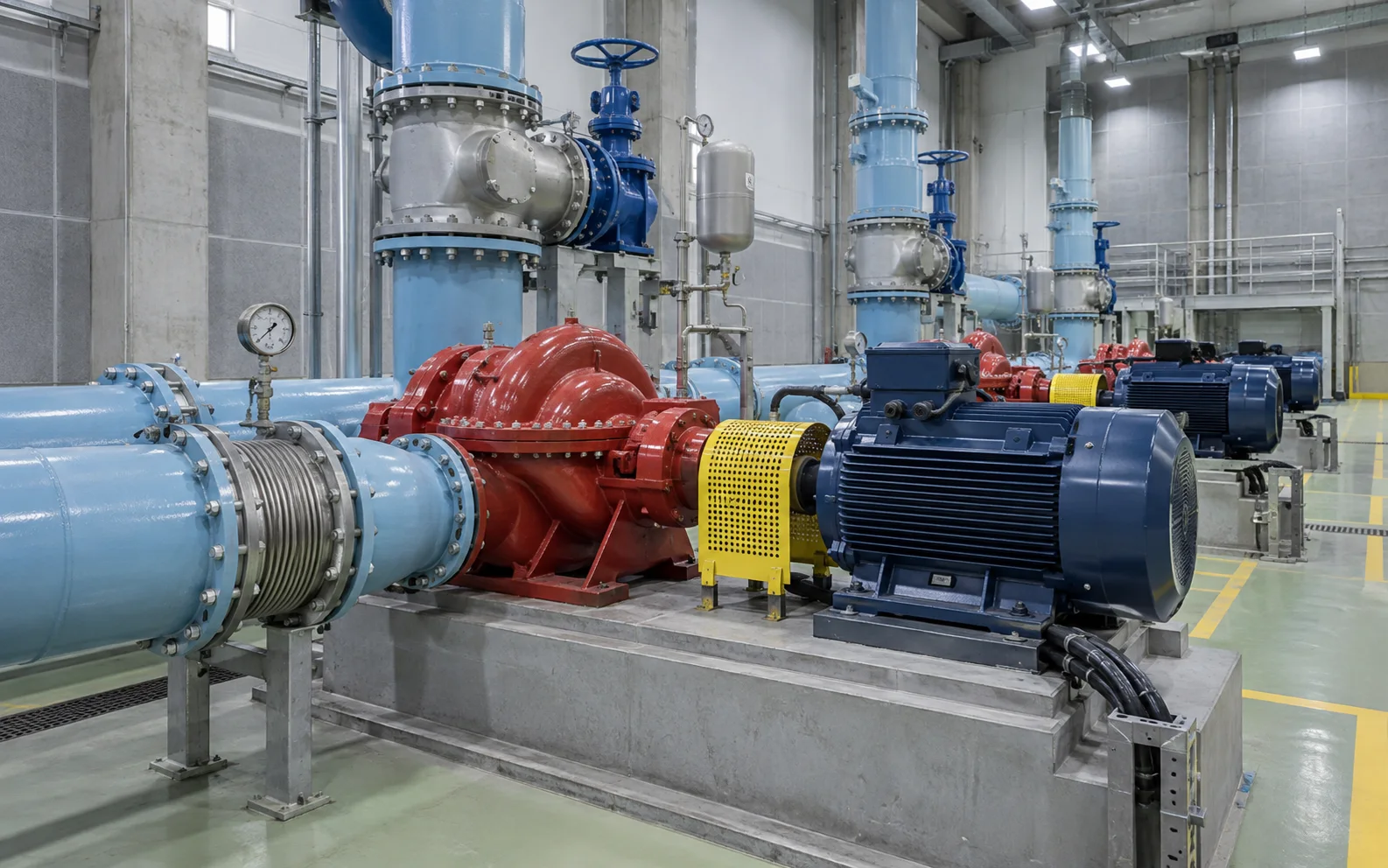
Load signatures reveal cavitation and wear in pressure-boosting stations.
Booster station pumps repeatedly start, stop and change speed with demand. SV500 uses electrical signature analysis (ESA) to compare current and load patterns per pump and screen for cavitation, bearing wear and impeller clogging.
Booster pumps often suffer cavitation and wear, and many stations are unmanned.
Load and environment changes accumulate as gradual degradation, and early changes often show first in current and load patterns.
Rounds alone easily miss continuous changes, so remote trends and event records are needed.
Analyzes VFD input/output voltage and current waveforms to assess rectifier diodes, DC-link capacitors, IGBTs, and the condition of the power supply and power quality.
Analyzes motor voltage and current signals without additional equipment-mounted sensors, screening mechanical faults (cavitation, bearings, vibration), electrical faults (stator, cable connections, heat), and load fluctuations.
Records and analyzes voltage, current, interruptions, sags, swells, harmonics, and trends to identify power quality abnormalities.
Performs diagnostic analysis and stores waveforms and results locally. The built-in web interface provides real-time measurements, equipment diagnostics, power quality, events, and reports.
Operators see which pumps need attention before visiting and deploy crews by risk.
Screens pumps whose problems could lead to low pressure.
Remote trends narrow targets so fewer station rounds are needed.
Compares health grades on one basis to set inspection order.
Continuous monitoring and early detection support availability, maintenance and energy efficiency.
Indicative ranges only; actual results depend on site conditions and corrective actions.
Name the one that matters most and we will set out the diagnostics and measurement points for it.
Request a demo