
Electrode process
Mixing and dispersion motors, coater drives, drying fans, calenders and slitters
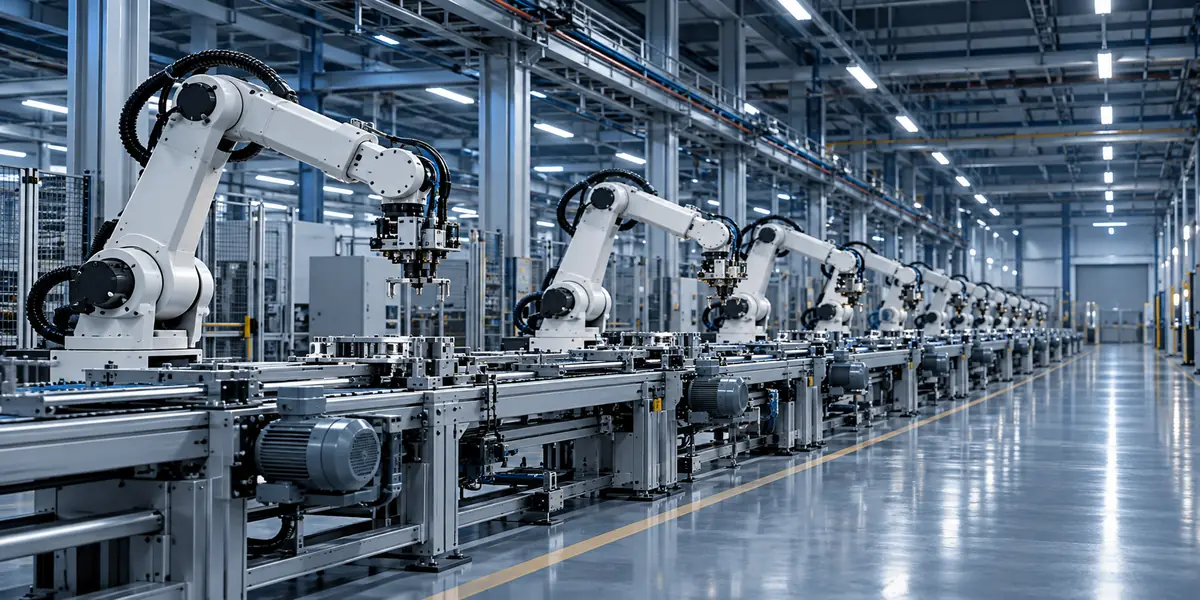
AI MANUFACTURING / SECONDARY BATTERY
Secondary-battery manufacturing connects mixing, coating, drying, calendering, slitting, assembly and multiple utilities. edgeSV analyzes load and condition changes in critical motors and inverters to support planned maintenance and asset-level anomaly monitoring.
Battery lines contain continuous-production equipment and many high-speed drives, so a single fault can stop the line and cause rework. Loads on mixers, roll-to-roll drives, drying fans and compressors vary with process conditions, making fixed-current thresholds insufficient. Stable dry-room HVAC and cooling utilities are equally important.
Mixing and dispersion motors, coater drives, drying fans, calenders and slitters
Winding and stacking auxiliaries, conveyors and transfer motors
Dry-room HVAC fans, chillers, cooling-water pumps and compressors
High-load inverters, MCC motor feeders and major power-quality points
Compare load patterns under similar process conditions to select assets requiring inspection.
Connect developing trends with maintenance schedules to reduce sudden drive stops.
Review production drives together with dry-room, cooling and compressed-air utilities.
The following are examples for reviewing industry applications. Actual diagnostic scope depends on motor and inverter design, load characteristics, measurement location and field-validation results.
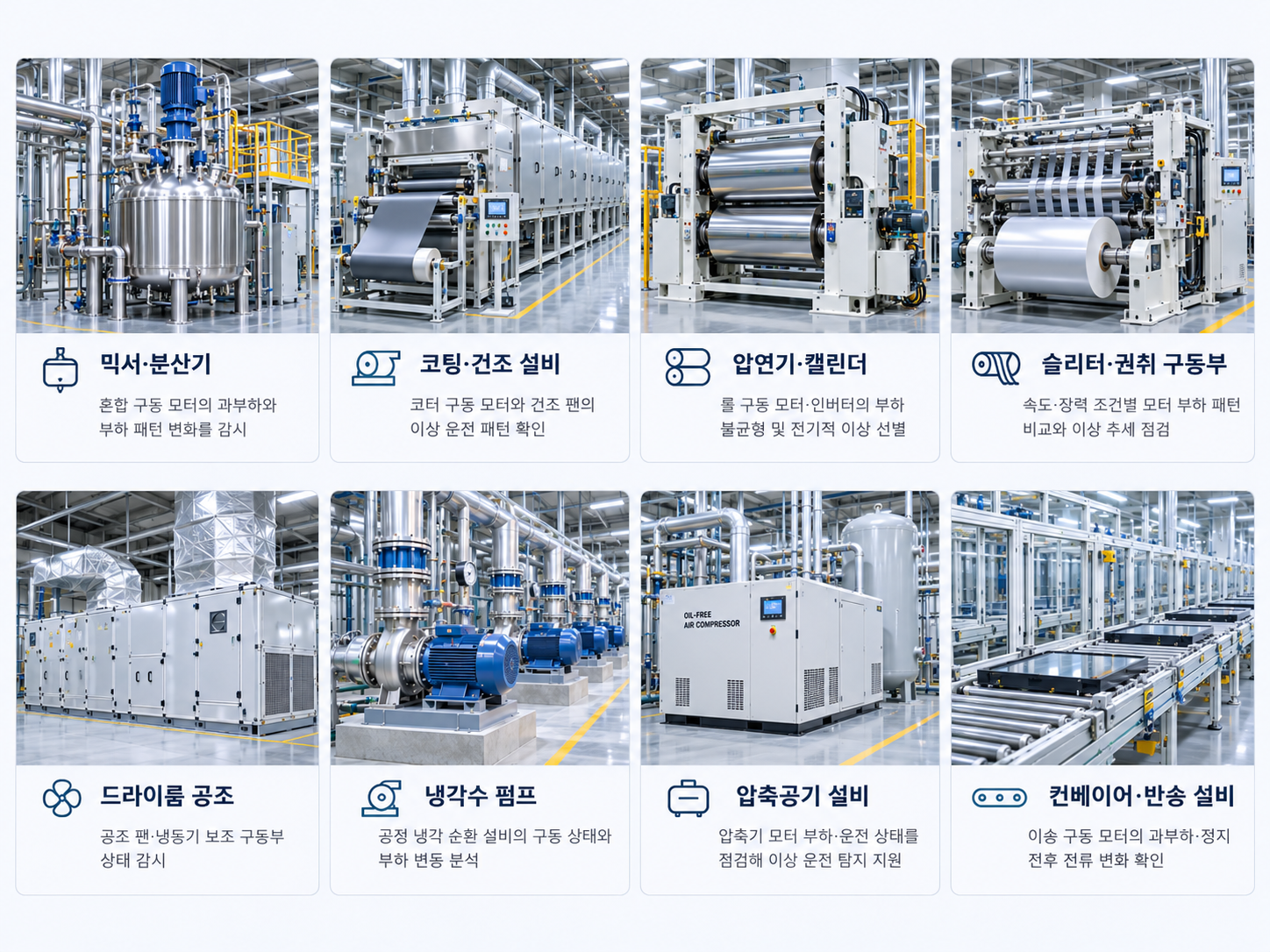
Monitor overload and changing load patterns in mixing motors
Check abnormal operating patterns in coater motors and drying fans
Identify load imbalance and electrical anomalies in roll motors and inverters
Compare motor-load patterns by speed and job condition and review abnormal trends
Monitor HVAC fans and auxiliary chiller drives
Analyze drive condition and load variation in process cooling loops
Review compressor motor load and operating state to support abnormal-operation detection
Check overload and current changes around stops in transfer motors
A calender drive motor shows a current and load pattern that differs under the same operating conditions.
edgeSV highlights repeated changes while the maintenance team reviews speed, tension and product conditions.
During a planned stop, the team inspects rolls, bearings and the drive train, then compares data before and after maintenance.
※ This is an illustrative scenario and does not represent an actual customer validation result or a confirmed failure-prediction date.
No. edgeSV monitors electrical drives such as motors and inverters. Internal cell defects, thermal runaway, gas leaks and fire detection belong to separate safety and quality systems.
Baseline data is required for each recipe, speed and load condition. Without separating operating phases, normal process changes can be confused with anomalies.
Dew point and humidity require separate sensors. edgeSV complements those measurements by monitoring related fans, chillers and pumps.
Related load changes may appear in electrical signals, but tension is not measured directly. Validation with tension-sensor and PLC data is required.
Consider calender or mixer drives with known failure history or high downtime cost, or critical dry-room utilities.
Motors · Inverters/VFDs · Fans and blowers · Compressors · Chillers
We can agree on measurement points and PoC scope using your equipment list, single-line diagram, motor and inverter specifications, and operating conditions.